
Kerala had the highest number of average sitting days at 48 days a year, followed by Odisha (41) and Karnataka (35).

'Even where we are now today, the growth rates are very good, but we need to get to 8-9 per cent growth in the years to come.'

Corporate India's net profit as a percentage of gross domestic product (GDP) dipped in the 2022-23 financial year (FY23) -- after rebounding sharply in FY22 -- amid a decline in global commodity prices. Top 500 companies' combined net profit stood at 4.1 per cent of the GDP for FY23, down from 4.3 per cent in the previous financial year when it had gone up from just 3.5 per cent in FY21. "The year-on-year (YoY) decline was led by global commodities, which contributed adversely to the ratio, while the financial sector contributed positively.

Half of India's top-priced stocks have outperformed the benchmark indices this year. On a year-to-date basis (YTD), the Sensex has gained 3.8 per cent and the Nifty50 3.4 per cent. The stocks which have outperformed the indices include 3M India, Nestle India, MRF, Shree Cement and Bosch while those who have underperformed the benchmarks include Page Industries (-10.4 per cent), Procter & Gamble (-4 per cent), Honeywell Automation (-0.9) and Lakshmi Machine Works, which gained 1.3 per cent.
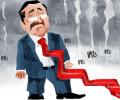
The initial public offering (IPO) market has seen some momentum of late with robust responses to recent issues. However, only some have been able to ride the wave. So far in 2023, 23 companies have let their approval granted by the markets regulator - the Securities and Exchange Board of India (Sebi) - lapse.

The National Stock Exchange (NSE) Nifty Next 50 Index could undergo large-scale changes if the proposed tweaks to its computation methodology get implemented. In a discussion paper floated recently, NSE Indices, which owns and manages a portfolio of over 350 indices under the Nifty brand, proposed that only stocks that are traded in the futures and options (F&O) segment can be part of the index. Currently, as many as 11 non-F&O stocks are part of the Nifty Next 50 Index, which, as the name suggests, represents the next rung of large and liquid securities after the Nifty50.

Shares of online food delivery aggregator Zomato rose above their initial public offering price after more than a year. The stock hit an intraday high of Rs 76.3 per share before settling at Rs 75.8. The company had priced its shares at Rs 76 during Rs 9,375-crore IPO in July 2021.

Continuing buying interest across the pack helped the Bank Nifty index improve its new high on Tuesday (May 30). The index of banking stocks ended Tuesday's session at 44,436, a gain of 124 points or 0.3 per cent. On Monday (May 29), Bank Nifty hit a new high after a gap of 166 days.
Improvement in financial savings channelised massive inflows into the equities market through the mutual fund route.

Close on heels of the launch of Gift Nifty (earlier SGX Nifty), domestic exchanges are pushing for extension of trading hours for the onshore derivatives market, said sources. Bourses are waiting for a final approval from market regulator Sebi on the proposal to keep the derivatives market open for longer hours, they said. The move is aimed at attracting more trading members for onshore futures and options (F&O) contracts amid risk that global investors could prefer trading at Gift City given the tax benefits.

Foreign portfolio investors (FPI) flows have turned positive on a trailing 12-month (TTM) basis for the first time since December 2021. Thanks to robust inflows over the past three months, the TTM overseas flows into domestic equities stand at over $7.3 billion-the most since November 2021. This has helped propel one-year Nifty returns to 12 per cent.

Boom, bust or a bit of both: as the jury bides time before ruling on the US 'recession', the economy's vital signs at a perplexing time of high-interest rates, still-punishing inflation, and surprisingly strong economic gains are a study of a growing debate over whether the world's largest economy is barrelling into a new downturn. With the US Federal Reserve's (Fed's) inflation fighters attempting the risky pursuit of 'pillow-soft landings' and its economy sending out mixed signals, if there is indeed a recession, it could spell trouble for domestic equities and corporate earnings growth.
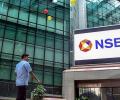
The National Stock Exchange (NSE) has received Rs 300 crore from the Securities and Exchange Board of India (Sebi) following relief from the Supreme Court (SC), which is hearing an appeal by the market regulator in the colocation case. The court on March 20 asked Sebi to return Rs 300 crore to the NSE from the Rs 1,107 crore the exchange had deposited as part of the disgorgement in the case. The NSE had given an undertaking that it will return the entire amount to Sebi if the latter wins its appeal before the SC.

State-owned Life Insurance Corporation of India (LIC), which completes one year of its listing on Tuesday, presents a sorry scorecard as far as its stock market performance goes. Shares of the insurance behemoth are down 40 per cent over their issue price of Rs 949 to Rs 567 apiece. The Sensex, on the other hand, has risen 14 per cent in the past one year.

The BSE Realty index on Monday soared 4.3 per cent-most among the 19-sectoral sub-indices-buoyed by the proposal to formalise fractional ownership of real estate in the country. The Securities and Exchange Board of India (Sebi) on Friday issued a discussion paper proposing to regulate online platforms offering fractional ownership in real estate, a model already popular in countries such as the United States and UAE.

Brokers have requested for a three-month extension from the Securities and Exchange Board of India (Sebi) for the validation of Know Your Client (KYC) records. In a letter to Sebi, industry body -- Association of National Exchanges Members of India (Anmi) -- has cited various issues and concerns raised by its members that have hampered the smooth completion of the validation process within the stipulated timeline. The Sebi circular had given KYC Registration Agencies (KRAs) a timeline of 180 days, ending on April 30, 2023, to validate client KYCs.

The infighting between the two promoters of Hikal-Baba Kalyani and sister Sugandha Hiremath-has put the company's growth at stake, InGovern has said in a note. The corporate governance firm has called for a change in the management and an overhaul of its board to protect the interest of minority shareholders, who own almost a third of the specialty chemicals company. The Kalyani and Hiremath families are mired in a legal dispute, with the latter seeking transfer of ownership of shares held by the Kalyani group, citing nearly three-decade old family arrangement.

Go First chief executive officer Kaushik Khona and tribunal-appointed interim resolution professional Abhilash Lal on Thursday reached out to the airline's staff, seeking their support for revival. While Khona said the company had taken all steps for the airline's revival, Lal put forward the view it would have to raise funds. Employee engagement took place a day after the National Company Law Tribunal (NCLT) admitted the airline's insolvency plea on Wednesday and ordered a moratorium on recoveries.
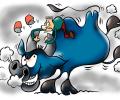
The ownership by domestic investors, individual as well as institutional, in companies listed on the National Stock Exchange (NSE) has breached the 25 per cent mark for the first time. The share stood at 25.72 per cent at the end of the March 2023 quarter, up from 24.44 per cent in the previous quarter, according to data from Prime Database. The share of foreign portfolio investors (FPIs), meanwhile, rose slightly to 20.56 per cent from 20.24 per cent as on December 31, 2022.

The gap between the highs and the lows in April for the benchmark S&P BSE Sensex was just 4.1 per cent - the narrowest since July 2021 and nearly half its three-year average. The absence of major positive triggers, sectoral rotation, and cautiousness due to earnings and economic uncertainty have kept a tight leash on the markets, observe experts. Remarkably enough, during the 17 trading sessions in April, the Sensex didn't even log an advance or a decline of more than 1 per cent.
 © 2026 Rediff.com - Advertise with us - Disclaimer - Privacy Policy - Sitemap - Feedback - About us - Terms of use - Grievances